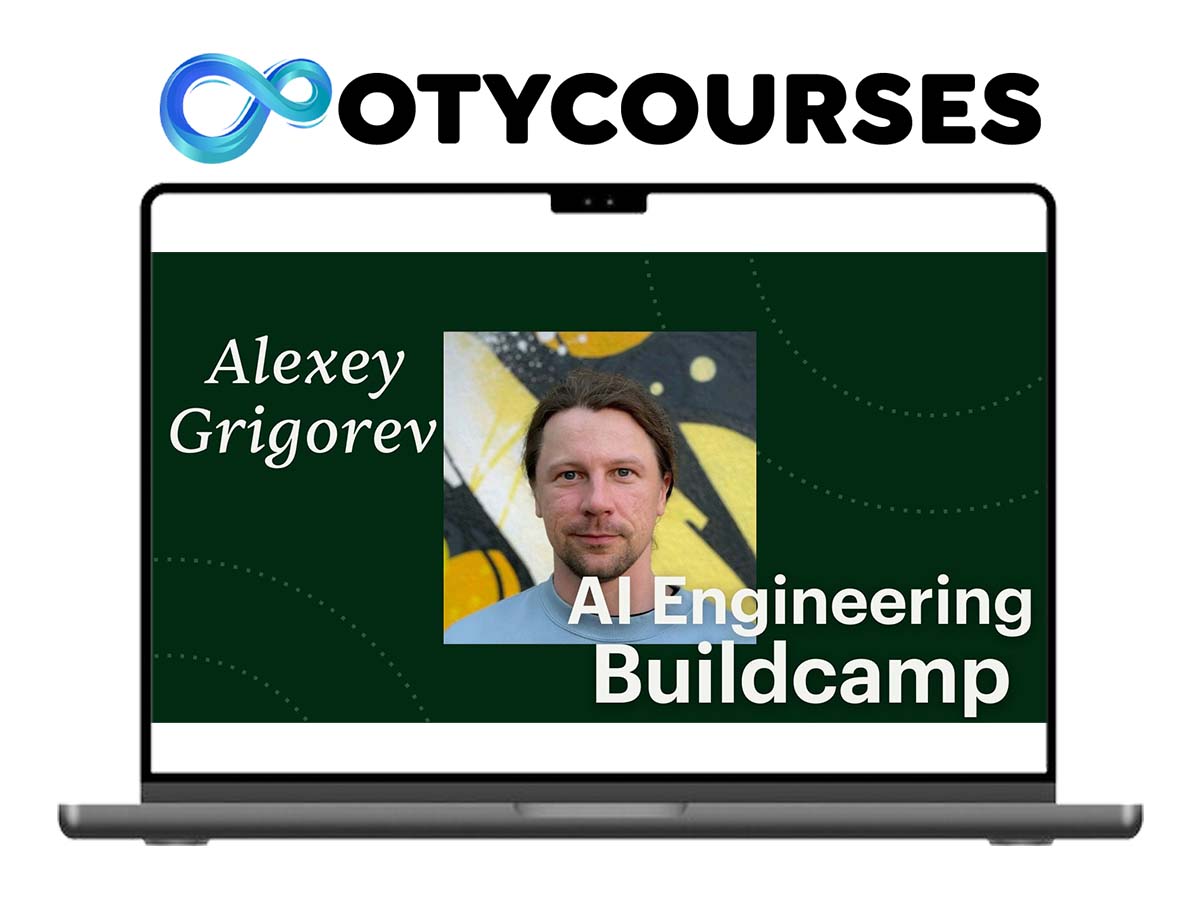
AI Engineering Buildcamp – From RAG to Agents by Alexey Grigorev
AI Engineering Buildcamp – From RAG to Agents by Alexey Grigorev
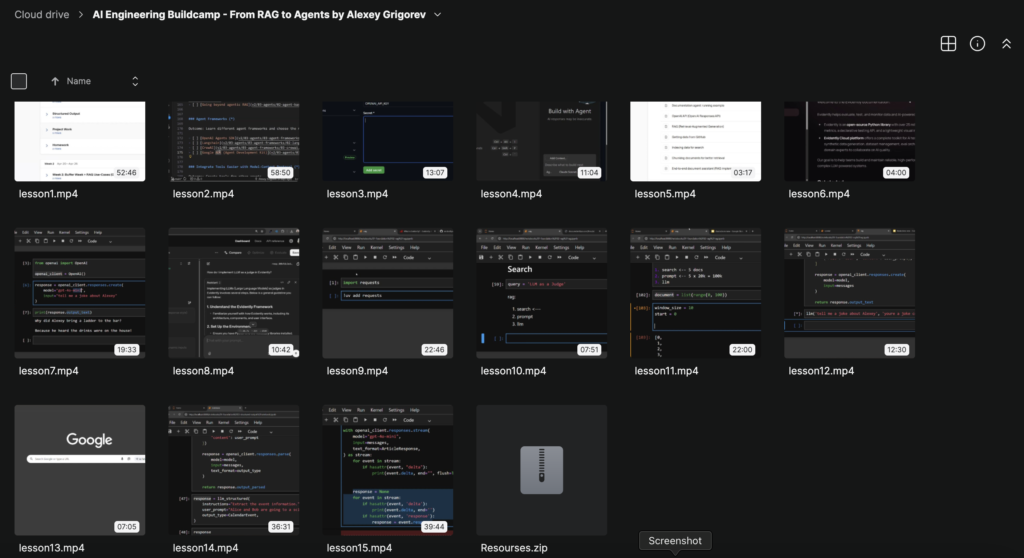
AI Engineering Buildcamp – From RAG to Agents
AI Engineering Buildcamp – From RAG to Agents by Alexey Grigorev is a hands-on, project-based training designed to take you from foundational AI concepts to building production-grade intelligent systems. This course focuses on real-world implementation, teaching you how to create AI assistants that can retrieve data, reason, and act using modern tools like LLMs, RAG pipelines, and agent-based frameworks.
Instead of staying at the tutorial level, this program guides you step by step through building scalable AI applications with real data, helping you develop practical skills that can be applied immediately in professional environments.
What’s Included
- 8+ hands-on AI projects
- Step-by-step implementation guides
- Real-world use cases and examples
- Live sessions and recorded content
- Community access and collaboration
- Capstone project for portfolio development
AI Engineering Buildcamp – From RAG to Agents Course
This course is structured as a complete learning journey where each phase builds toward a fully functional AI system. You will learn how to design, develop, evaluate, and monitor AI applications using industry-relevant tools and frameworks.
The focus is on execution — from building your first RAG pipeline to creating advanced multi-agent systems capable of handling complex tasks like research, coding, and automation
What You Will Learn
- Build AI assistants using Large Language Models (LLMs)
- Implement Retrieval-Augmented Generation (RAG) systems
- Create agent-based workflows with tool-calling capabilities
- Develop systems that can reason and take actions
- Test and evaluate AI outputs using structured methods
- Monitor performance, costs, and behavior in real time
- Apply guardrails to ensure safe and reliable AI usage
- Build complete AI applications from idea to deployment
Course Modules
Phase 1 – LLMs & RAG
- Understanding LLM fundamentals
- Building RAG pipelines with real data
- Creating conversational AI assistants
- Working with APIs and structured outputs
Phase 2 – Agentic Systems & MCP
- Adding agent behavior with function calling
- Using frameworks like PydanticAI and Agents SDK
- Connecting tools using MCP (Model Context Protocol)
- Building tool-enabled intelligent systems
Phase 3 – Testing & Evaluation
- Evaluating AI outputs with metrics and benchmarks
- Using LLMs as evaluators
- Comparing prompts and models
- Improving system performance with data
Phase 4 – Monitoring & Guardrails
- Tracking usage, costs, and performance
- Implementing observability tools
- Adding safety layers and guardrails
- Building reliable production systems
Phase 5 – Use Cases & Projects
- FAQ assistant
- YouTube Q&A system
- Documentation agent
- AI coding assistant
- Deep research agent
- Code evaluator system
Phase 6 – Capstone & Hackathon
- Build a full end-to-end AI application
- Apply all concepts learned in real-world scenarios
- Work on practical projects with real datasets
- Collaborate on advanced AI solutions
AI Engineering Buildcamp – From RAG to Agents by Alexey Grigorev Course Curriculum
Week 1 – Foundations & RAG Implementation
- Course overview & setup
- Environment preparation (Windows, Linux, MacOS, Codespaces)
- AI-assisted development & libraries overview
- OpenAI API (Responses API)
- Introduction to RAG (Retrieval-Augmented Generation)
- Data ingestion from GitHub
- Document indexing & chunking strategies
- Building an end-to-end RAG assistant
- Structured output & streaming
- Project ideas & mini-project
- Capstone introduction
Week 2 – RAG Deep Dive
- RAG class & advanced concepts
- Improving retrieval pipelines
Week 3 – Agentic Systems & Tool Calling
- Agentic RAG and function calling
- Tool-call loop architecture
- Q&A loop frameworks
- Structured outputs with agents
- Introduction to agent frameworks
- PydanticAI (production-ready agents)
- Agent-based search systems
- Mini-project & capstone work
Week 4 – Application Development & Testing
- Converting notebooks into production code
- Streaming with PydanticAI
- Building Streamlit applications
- Testing agents and tool calls
- Refactoring and improving reliability
- Cost tracking and optimization
- Creating LLM judges
- Advanced testing workflows
Week 5 – Monitoring & Observability
- Logfire integration
- Tracking runs and user feedback
- Observability and debugging systems
- Capstone progress
Week 6 – Evaluation & Optimization
- Collecting evaluation data
- Running agents on real scenarios
- Evaluating AI outputs
- Alignment and evaluation pipelines
- Synthetic data generation
- Testing agents at scale
Week 7 – Final Project & Hackathon
- Project guidelines & evaluation criteria
- Documentation best practices
- Peer reviews
- Hackathon participation
Week 8 – Advanced Implementation
- Independent project work
- Applying full system architecture
Week 9 – Project Presentation
- Student project presentations
- Final capstone submission
Bonus – Advanced AI Systems & Agents
LLM APIs & Ecosystem
- OpenAI Chat Completions API
- Groq, Anthropic, Amazon Bedrock
- Gemini, Z.ai, Grok, Ollama
Vector Search & RAG Optimization
- Vector search systems
- Advanced chunking methods
RAG Use Cases
- FAQ dataset systems
- Chatbot implementation
- Content management RAG
Multimedia RAG
- YouTube transcripts processing
- Prompt engineering
- Structured outputs
Advanced Data Pipelines
- PDF text extraction
- Large-scale document processing
- Parallel processing
- Persistent knowledge bases
Web Search Agents
- OpenAI web search tools
- PydanticAI search agents
- Brave API integration
- Content extraction systems
Tool Calling & Frameworks
- OpenAI tool calling (Responses & Chat APIs)
- Anthropic & Gemini integrations
- Agents SDK, LangChain, Google ADK
- Model Context Protocol (MCP)
Agent Architectures
- Routing systems
- Prompt chaining
- Plan-and-execute workflows
- Multi-agent collaboration
- Orchestration systems
Monitoring & Evaluation Systems
- Logging & event tracking
- SQLite & dashboards (Streamlit, Grafana)
- AI evaluation systems
- Improving judges with AI
Production AI Development
- Environment setup
- API integrations
- Agent deployment with PydanticAI
- Testing and monitoring
- Guardrails implementation
AI Coding & Research Agents
- AI coding assistants
- Multi-agent coding systems
- Deep research agents
- Project scoring agents
- Advanced orchestration
Who This Course Is For
- Software engineers interested in AI development
- Data scientists looking to build real AI applications
- Developers wanting to move beyond tutorials
- AI enthusiasts aiming to create production-ready systems
Prerequisites
- Basic programming knowledge
- Familiarity with Python, Git, and command line tools
- Understanding of APIs is helpful
- Access to an AI API (such as OpenAI or alternatives)
Why This Course Is Valuable
- Focuses on real-world application, not just theory
- Covers the full lifecycle of AI system development
- Includes modern tools and frameworks used in industry
- Helps build a strong portfolio with practical projects
- Teaches scalable and production-ready approaches
Course Details
- Format: Video lessons + practical projects
- Level: Intermediate to Advanced
- Category: AI / Machine Learning / Development
- Access: Instant access after purchase
Conclusion
AI Engineering Buildcamp – From RAG to Agents is a complete, practical program for anyone who wants to build real AI systems using modern technologies. From foundational concepts to advanced agent workflows, this course equips you with the tools and knowledge needed to create intelligent, scalable applications.
Enroll AI Engineering Buildcamp – From RAG to Agents.