TL;DR:
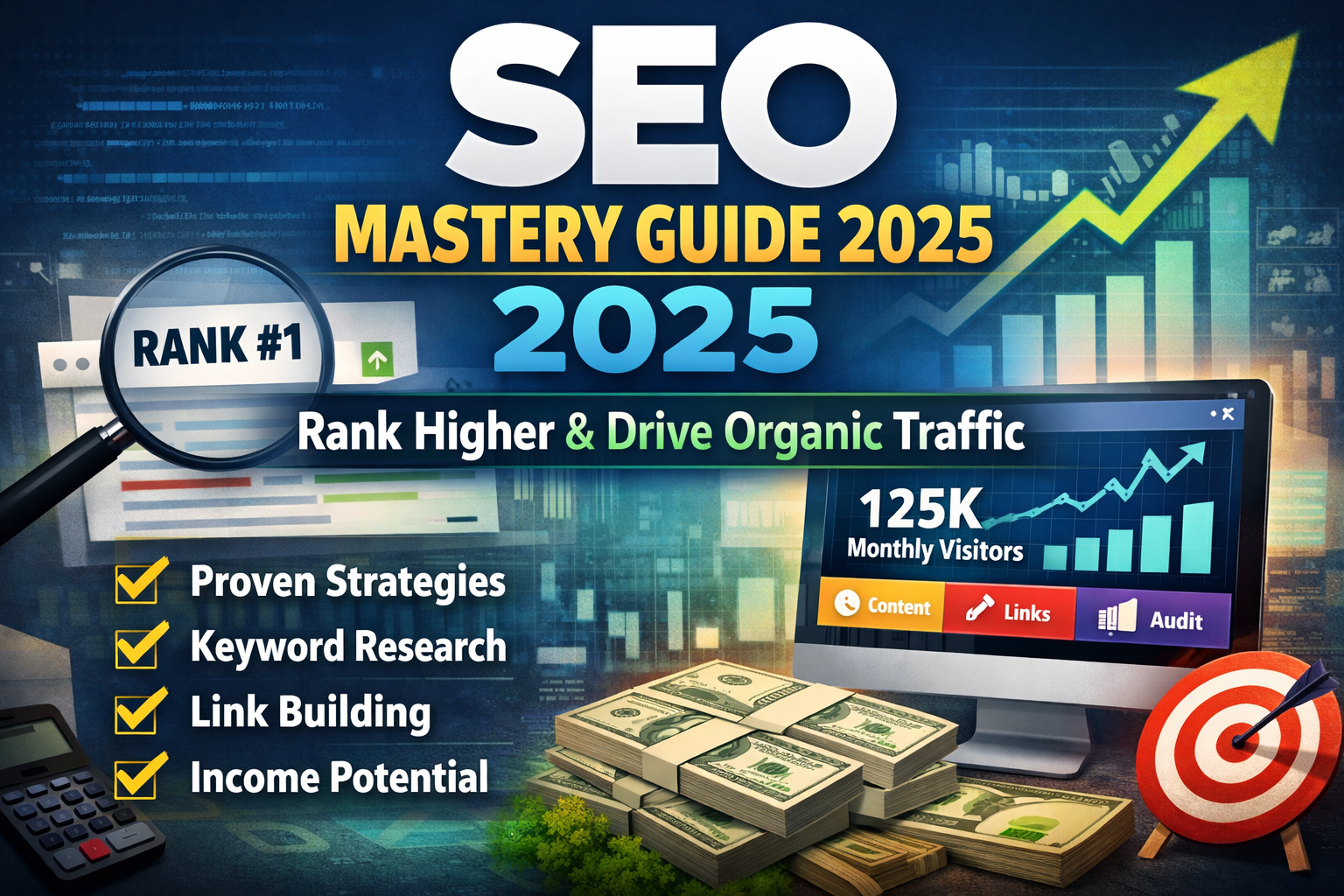
This advanced SEO guide covers technical optimization, content authority, modern link building, automation, and real-world monetization strategies. Learn how marketers rank for dozens of high-value keywords, generate consistent organic traffic, and turn SEO into long-term income.
Quick Start: Beginner SEO Action Plan
If you’re just getting started, follow this structured roadmap:
- Learn how search engines crawl and index pages
- Choose your SEO focus (content, technical, or local)
- Get structured training — for example, start with
👉 SEO Audit Mastery by Olga Zarr - Apply strategies to a real website
- Follow a 12-month skill-building roadmap
What is SEO and Why It’s Essential in 2025
Search Engine Optimization (SEO) is the systematic process of improving your website’s visibility in search engines like Google.
In 2025:
- Over 53% of website traffic comes from organic search
- The global SEO industry exceeds $80+ billion annually
- SEO delivers an average 275% ROI
- Organic traffic compounds over time
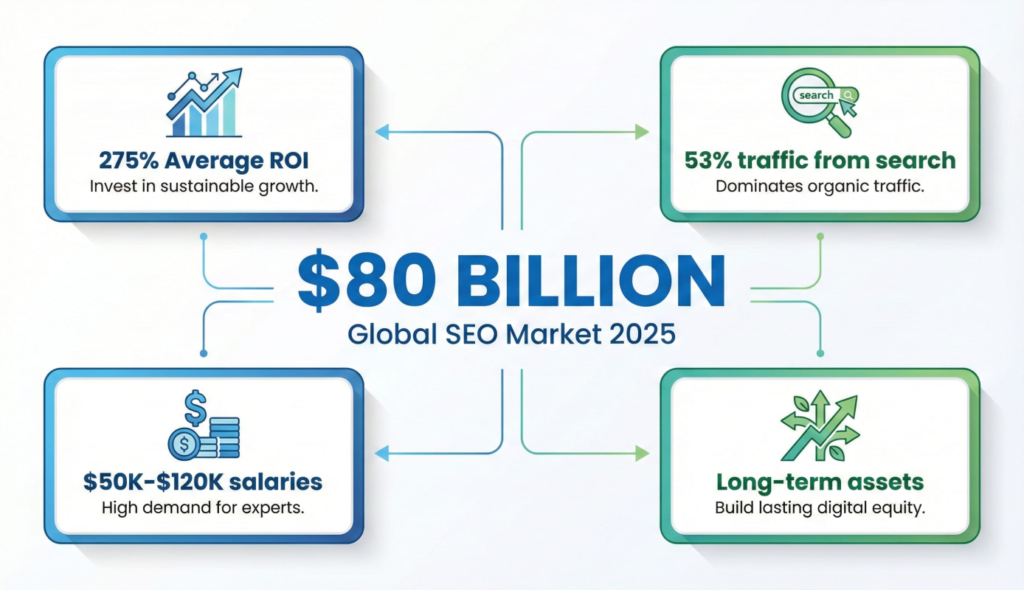
Unlike paid ads, SEO builds long-term digital assets.
Search engines reward:
- High-quality content
- Strong technical structure
- Authority signals (backlinks)
- Excellent user experience
Master these pillars — and rankings follow.
SEO Income Potential in 2025
SEO is one of the most scalable digital skills.
| Level | Timeline | Income Range | Focus |
|---|---|---|---|
| Beginner | 0–6 months | $0–$1,000 | Learning & testing |
| Intermediate | 6–18 months | $1,000–$5,000 | Freelance clients |
| Advanced | 18–36 months | $5,000–$15,000 | Agency or affiliate |
| Expert | 3+ years | $15,000–$50,000+ | Consulting / ownership |
Income varies by niche, execution, and consistency.
Content SEO: Building Topical Authority
Content remains the foundation of rankings.
Modern SEO focuses on topic clusters, not isolated keywords.
Instead of targeting random phrases, successful websites build comprehensive topical authority.
To deepen content SEO skills, structured programs like:
👉 Topical Maps Unlocked 2.0 by Yoyao Hsueh
👉 Compact Keywords SEO by Edward Sturm
help build semantic coverage frameworks that improve ranking stability.
Content SEO vs Traditional Content Marketing
| Factor | Content SEO | Traditional Content |
|---|---|---|
| Goal | SERP rankings | Brand awareness |
| Strategy | Keyword clusters | Creative focus |
| Traffic | Organic | Social / referral |
| Long-Term Value | Very high | Medium |
SEO content is built to rank first — then convert.
Technical SEO: The Ranking Infrastructure
Technical SEO ensures your website can be crawled, indexed, and understood properly.
Even the best content won’t rank without technical foundations.
Technical SEO Checklist
- Load time under 3 seconds
- Mobile responsive design
- Clean sitemap & robots.txt
- Structured data (schema)
- Optimized Core Web Vitals
- HTTPS enabled
- Logical internal linking
For structured technical auditing frameworks, see:
👉 SEO Blueprint by Danny Postma
Or the advanced auditing framework inside:
👉 SEO Audit Mastery by Olga Zarr
Link Building in 2025: Quality Over Quantity
Backlinks remain one of the strongest ranking factors.
But modern link building focuses on:
- Authority
- Relevance
- Editorial placement
- Natural acquisition
Link Building Methods
| Method | Difficulty | Link Quality |
|---|---|---|
| Guest Posting | Medium | High |
| Broken Link Building | Medium | High |
| Digital PR | High | Very High |
| HARO Outreach | Low | Very High |
For structured link acquisition systems:
👉 SEO Bridge Builders by Liam Carnahan
Local SEO: Winning Geographic Search
If your business serves a specific region, local SEO can outperform national competition.
Core steps:
- Optimize Google Business Profile
- Generate authentic reviews
- Maintain citation consistency
- Publish localized content
For advanced local strategies:
👉 Maps Mentor Unleashed by Paul James
Real SEO Growth Examples
✔ 125,000 monthly visitors built in 14 months through topic clusters
✔ $45,000/month SEO agency scaled with structured processes
✔ $18,000/month affiliate site using organic traffic
✔ 340% local lead increase from Google Business optimization
These results came from systematic application — not shortcuts.
12-Month SEO Growth Roadmap
Phase 1 (Months 1–3)
Learn fundamentals, build optimized content, study search intent.
Phase 2 (Months 4–8)
Master technical audits, topical mapping, and link building.
Phase 3 (Months 9–18)
Specialize, scale systems, increase monetization.
SEO compounds — patience wins.
SEO Automation & AI in 2025
Modern professionals automate:
- Rank tracking
- Reporting
- Technical scans
- Keyword grouping
But strategy and content creation still require human judgment.
The winning combination is:
AI + Frameworks + Experience
Essential SEO Tools
Free Tools
- Google Search Console
- Google Analytics
- Screaming Frog (free version)
Premium Tools
- Ahrefs
- SEMrush
- Moz Pro
- Surfer SEO
Frequently Asked Questions
How long does SEO take?
Initial movement: 3–6 months.
Strong traffic growth: 6–12 months.
Is link building still important?
Yes — quality and relevance matter more than volume.
Is SEO better than paid ads?
SEO offers stronger long-term ROI. Paid ads offer speed.
Start Your SEO Journey Today
SEO is not a quick hack.
It’s a long-term digital asset strategy.
If you want:
- Predictable organic traffic
- Sustainable revenue
- Authority in your niche
Then structured SEO mastery is the path forward.
Explore the resources above, apply consistently, and measure your progress monthly.
Organic traffic compounds — but only for those who start.